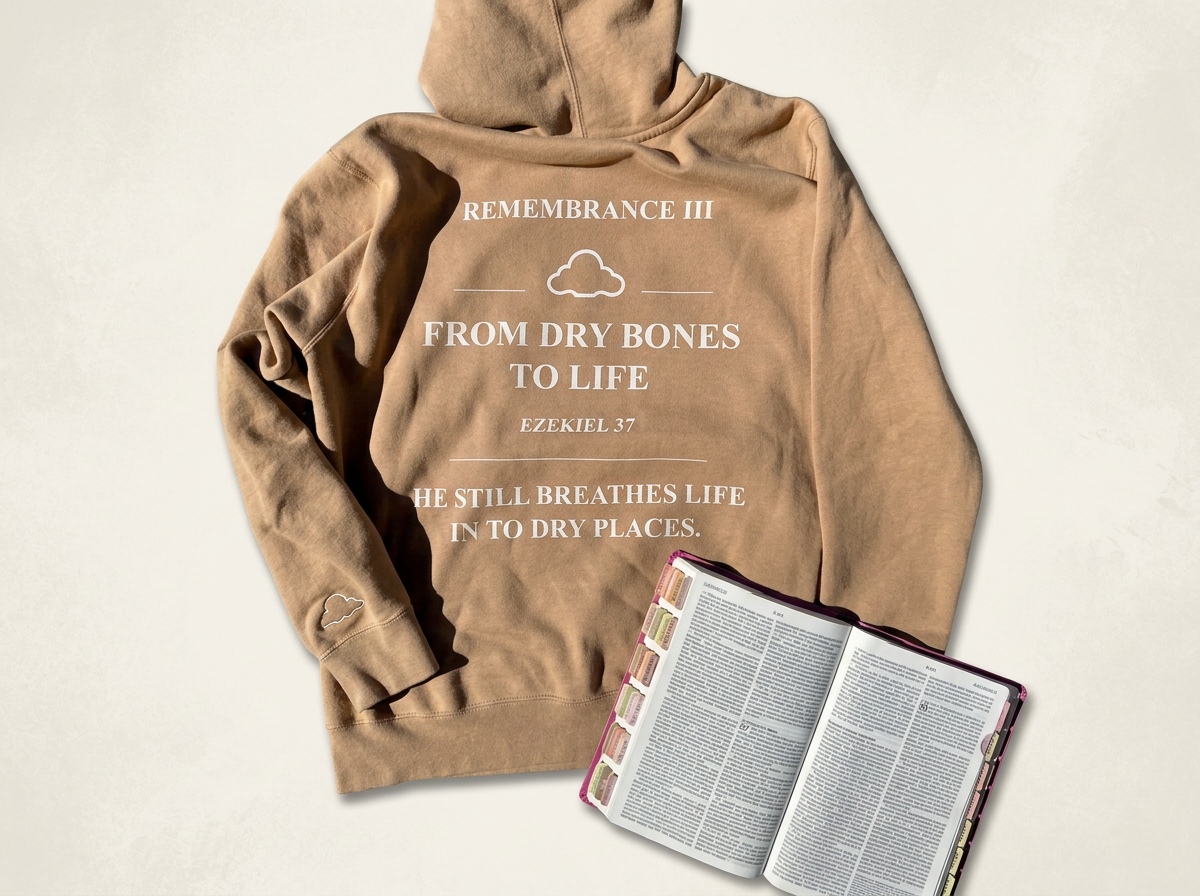
THE STORY BEHIND THE REMEMBRANCE
Before there was a collection, there was a word.
On July 1, 2025, I was in Ezekiel 37—the valley of dry bones—when I wrote something in my journal that I wouldn't fully understand until later:
“God is using my voice to bring life back into what looked dead.”
At the time, I believed the Lord was drawing my attention specifically to women—women who felt emotionally numb, spiritually cold, or had been tangled in cycles for so long they had forgotten who they were.
And beneath it, I wrote:
“God is using my obedience, my story, & my Spirit-filled boldness to say: ‘Live again. Breathe again. Walk again in holiness.’”
I didn't know then how much God would expand what I thought I understood.
What began with a burden for women became something larger: a reminder for anyone who finds themselves standing in a place that looks too dry, too broken, or too far gone for life to return.
At the time, there was no Remembrance Collection. There was no hoodie.
There was simply His Word, a page in my journal, and something I believed God was asking me to remember.
Later, those dry bones became a remembrance.
He still breathes life into dry places.
JULY 1, 2025
Written before I knew what it would become.
In this moment, I had no idea I was writing the beginning of a Remembrance.
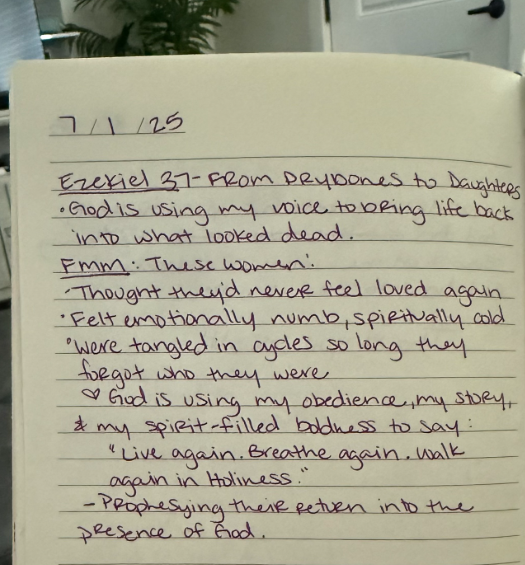
Some things make more sense when you look back.
EZEKIEL 37
The valley looked dead.
Then God told Ezekiel to speak.
In Ezekiel 37, God brings the prophet Ezekiel into a valley filled with dry bones. They aren't merely dead—they are described as very dry. What Ezekiel sees looks beyond restoration.
Then God asks him a question:
“Son of man, can these bones live?”
Ezekiel answers, “Sovereign Lord, you alone know.”
God tells Ezekiel to prophesy to the bones. As he speaks what God commands, the bones come together. Flesh covers them—but there is still no breath in them.
Then God tells him to prophesy to the breath.
Breath enters them.
And what had been lying lifeless in the valley stands again.
This is where the Remembrance comes from.
Ezekiel 37 was a prophetic vision given to Israel in a season of exile and hopelessness. Through the vision, God promised His exiled people restoration and renewed life.
That truth is what stayed with me.
Not that every broken thing will be restored in the exact way we expect. Not that faith means pretending dry places aren't dry.
But that God is still God in the valley.
He still speaks to places that look finished.
He still restores what only He can restore.
He still breathes life where we cannot manufacture it ourselves.
That is the heart behind From Dry Bones to Life.
He still breathes life into dry places.
Maybe you're standing in a dry place, too.
Maybe something in your life feels finished.
Maybe you've prayed about it, grieved it, tried to fix it, or simply learned how to live around the ache of it.
I don't know what brought you here or what your dry place looks like.
But I do know this:
Your hope does not have to rest in your ability to bring dead things back to life.
That was never Ezekiel's power.
And it isn't yours.
The God who met Ezekiel in the valley is still God in yours.
So, if all you can do today is stand in the middle of what you don't understand and say,
“Sovereign Lord, You alone know,” let that be enough.
You don't have to manufacture the breath.
Stay where He stays.
Move where He moves.
And remember what He has done.